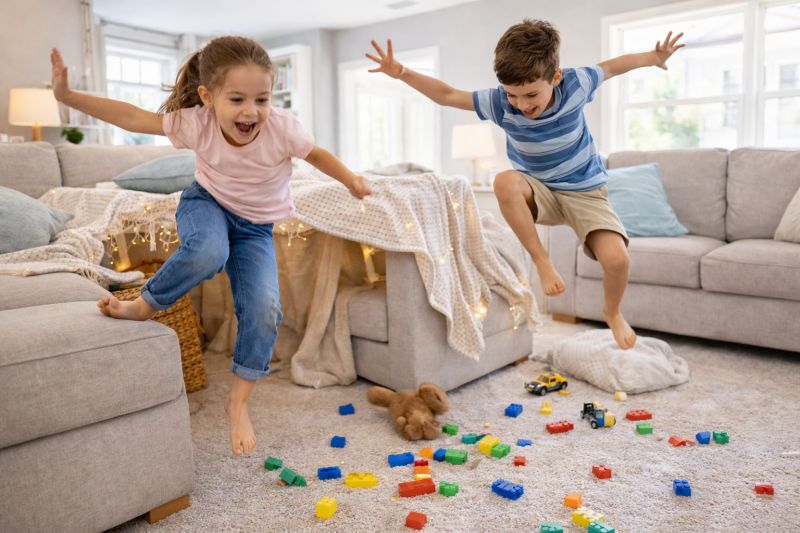

When you were growing up, did you ever hear:
“Sit down.”
“Stop fidgeting.”
“Get down from there.”
“Will you please just stay still!”
real-nutrition-matters.com
Hmmm… me too…
And if I’m honest, I probably passed those same messages on to my own kids, thinking I was teaching them to behave while keeping my self sane.
But lately I’ve been wondering:
Were we disciplining them to behave…
or unintentionally training the natural movement out of them?
Here’s why I’m asking.
The hidden science of NEAT (Non‑Exercise Activity Thermogenesis)
There’s a whole area of research around something called NEAT (Non‑Exercise Activity Thermogenesis) which is just a fancy way of describing all the little movements we make without thinking: standing up, shifting in our chair, pacing while on the phone, fidgeting, wandering to the window, stretching, pottering.
And while having someone ‘fidget’ when you’re trying to concentrate can be sooo distracting. These tiny, almost invisible movements matter more than we ever realised.
real-nutrition-matters.com
Studies show that individuals living with obesity sit around 2.5 hours more per day than their lean counterparts. Not because they’re less motivated, but because their bodies have learned to move less.
And those missing micro‑movements can add up to 350 fewer calories burned per day.
- Not from the gym.
- Not from willpower.
- Just from everyday life.
So when we tell kids to “sit still”…
When workplaces reward stillness…
When society equates quiet bodies with “good behaviour”…
We might be shaping habits that make weight maintenance harder later on.
This isn’t about blaming ourselves, our parents, or anyone else.
It’s about awareness and food for thought…
Once we see the role of NEAT, we can start to re‑invite movement back into our days in small, compassionate, human ways.
Not workouts.
Not discipline.
Just life… moving again.
If you love science that explains real human behaviour not just diet talk follow Real Nutrition Matters for more insights you can actually use.

