
For the first time, America has declared war on ultra-processed food — and on that point, the UK and US finally agree. But when it comes to protein and fat, their stories begin to diverge.real-nutrition-matters.com
I don’t know about you but as a UK qualified nutritionist I’d expect nutrition advice to be shaped by evidence, not trends. Yet the US now seems to echo a gym culture more than public health, while the UK remains cautious — and coherent.
Which makes the release of the new Dietary Guidelines for Americans (2025–2030) especially interesting reading.real-nutrition-matters.com
Billed as…
“…the most significant reset of federal nutrition policy in its history.”
A big bold statement… and on the surface, the new Dietary Guidelines for Americans (2025–2030) sounds reassuring. New guidelines should mean new science, shouldn’t they?
And in some areas, I genuinely welcome the shift.
For the first time, the US guidance openly challenges ultra-processed foods, describing them as loaded with refined carbohydrates, added sugars, excess salt, unhealthy fats and chemical additives.
Urging Americans to:
“Put real food back at the center of the American diet.”
Mirroring the long‑standing UK messaging in the Eatwell Guide, which emphasises:
- minimally processed foods
- fibre‑rich plant foods
- whole grains
- lower salt, sugar and fat
From an evidence standpoint, this is long overdue but welcome.
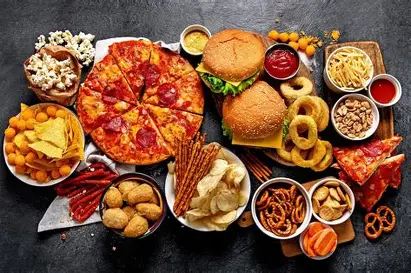
A range of ultra processed foods (UPF)
Large observational studies consistently link high UPF intake with obesity, type 2 diabetes, cardiovascular disease, even depression and all‑cause mortality (Hall et al., 2019; Monteiro et al., 2018; BMJ 2023 umbrella review).
So…On UPFs, science and policy finally speak the same language on both sides of the Atlantic.
real-nutrition-matters.com
Saturated Fats
Where things start to diverge is not in the numbers here but in the story told with food.
Both the UK and the US still recommend limiting saturated fat to no more than 10% of total energy. That hasn’t changed. The UK bases this on the 2019 Scientific Advisory Committee on Nutrition report, which reviewed decades of evidence linking saturated fat with cardiovascular risk.
But the food messaging now feels very different. The UK continues to advise reducing fatty meats, butter and full-fat dairy, while encouraging fibre-rich foods, whole grains and plant-based fats. The numbers and the food advice tell the same story.
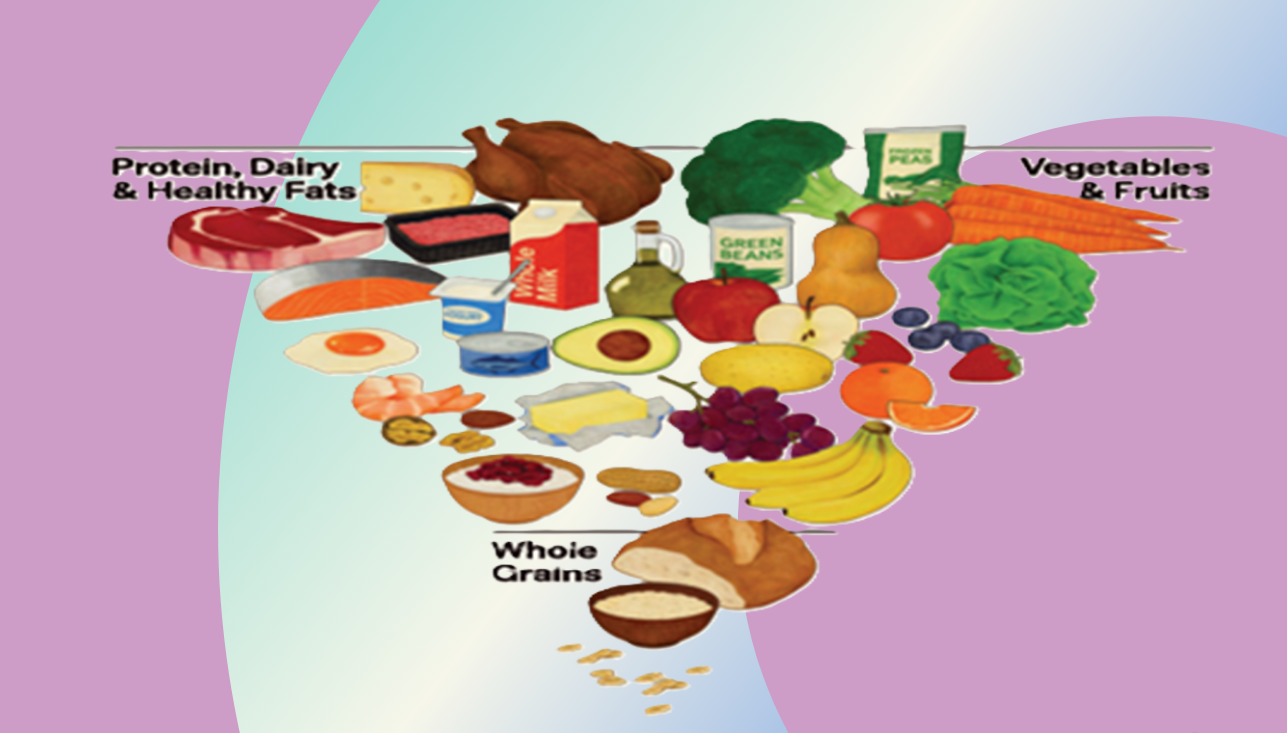
The new US guidance, however, visually promotes foods such as red meat, cheese, whole milk and butter as part of its “real food” message. This creates a quiet contradicti It isn’t that one country says saturated fat is suddenly healthy and the other says it isn’t. It’s that one keeps its messaging aligned, while the other pulls in two directions at once.
Guidance for health or body-composition optimisation?
Protein is where the shift becomes even more striking.
The US now recommends intakes of around 1.2 to 1.6 grams per kilogram of body weight per day. This change is based largely on studies looking at weight loss and resistance training — in other words, performance and body-composition research.
The UK still recommends about 0.75 grams per kilogram per day. That figure comes from long-term population studies designed to answer a different question: what does the average adult need to stay healthy and avoid deficiency?
These are not competing answers to the same problem. They are answers to two different questions. One is about maintaining health across a population. The other is about optimising muscle and fat loss in specific contexts.
Higher protein can absolutely be helpful if you are:
- lifting weights,
- older and at risk of muscle loss
- following an intensive weight-loss programme
But there is no strong evidence that intakes at 1.2 to 1.6 grams per kilogram improve longevity, heart health or metabolic health in the general population.
Researchers at Stanford have already pointed out another practical issue. Most Americans already meet basic protein needs, and the new targets are difficult to achieve without also increasing saturated fat and salt. In other words, the push for more protein risks colliding with the limits on fat and sodium.real-nutrition-matters.com
So the public hears: eat more protein, but keep fat low, while choosing foods that are naturally higher in saturated fat. It is easy to see how that becomes confusing. And when protein displaces plant foods, fibre quietly drops out of the picture.
What sits underneath all of this is a difference in philosophy.
The UK approach remains cautious, fibre-focused and population-based. It is not exciting, but it is consistent. The US language now carries echoes of gym culture and body-optimisation — a narrative of “more protein, more strength, real food” that resonates culturally, even when the science is more nuanced.
To be fair, both countries now agree on something important: ultra-processed food is a major problem for health. That alone is progress.
But beyond that, the question becomes: are guidelines meant to help a nation stay healthy, or to help individuals optimise body composition?
Those are not the same goal.real-nutrition-matters.com
And when nutrition policy begins to reflect culture and ideology as much as evidence, the result is not empowerment. It is confusion.
In the end, the clean distinction is this. UK protein guidance is about health maintenance. US protein guidance is about body-composition optimisation.
They are not interchangeable.real-nutrition-matters.com
And for anyone trying to eat well in a noisy world of advice, coherence may be just as important as innovation.
The clean takeawayreal-nutrition-matters.com
Both countries now agree on one crucial point: ultra‑processed foods harm population health.
They also still agree on the numeric limit for saturated fat.
But only one keeps its food messaging aligned with that science.
- UK protein guidance = health maintenance
- US protein guidance = body‑composition optimisation
These are not the same thing.real-nutrition-matters.com
Nutrition policy should protect population health — not mirror fitness culture or political mood.
Because when guidance becomes cultural, ideological or performative, the public pays the price in confusion.
Key sources
- Scientific Advisory Committee on Nutrition (2019). Saturated Fats and Health
- NHS Eatwell Guide (UK)
- Dietary Guidelines Advisory Committee Scientific Report (US, 2025)
- U.S. Department of Health & Human Services (2025). Dietary Guidelines for Americans 2025–2030
- Hall et al., Cell Metabolism (2019)
- Monteiro et al., Public Health Nutrition (2018)
- BMJ Umbrella Review on UPFs and health outcomes (2023)
- Stanford Nutrition Policy Review (2025)

