
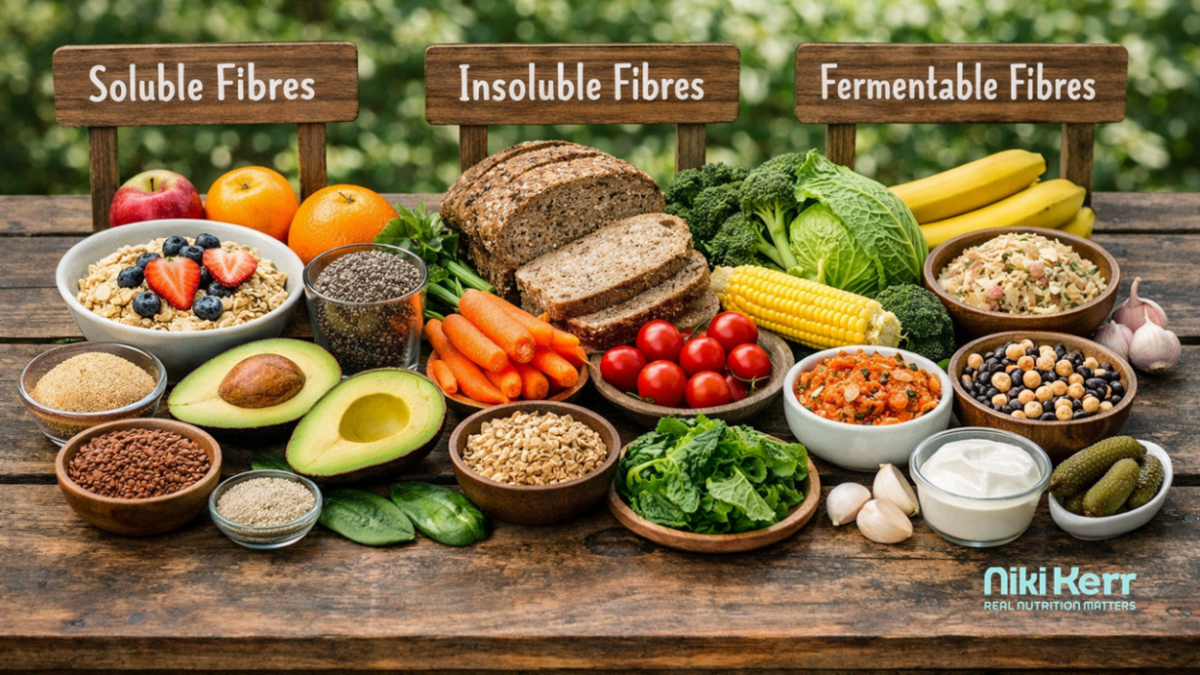

Most people think fiber is just something that helps you go to the loo and while that’s part of it. That’s like saying sleep is just “lying down.” Because:
Fibre isn’t just about what leaves your body, it’s about what runs it.
Think of a car running on poor fuel…If your system feels noisy, inconsistent, or hard to manage…It may not need more restriction ;or even a full blown service…
It may just need better input.
And yes fibre is technically a carbohydrate, but unlike other carbs, it’s not the type your body turns to sugar in-fact we can’t even digest it which is exactly why it’s so powerful!

Across authoritative nutrition bodies including Harvard, the British Nutrition Foundation, and even the BBC Good Food fibre is consistently defined as a non‑digestible carbohydrate found in plants. It’s grouped under carbohydrates because of its chemical structure, even though it behaves completely differently in the body, and currently in the UK it’s recommended that adults eat 30g/day.
recommended adult intake = 30g/day
So let’s unpack this and reveal why we absolutely need to be paying attention to the different types, what they do and where to find them.
The 3 Types of Fibre The Difference & Why They Matter
Once you understand that fibre isn’t just “roughage” but a metabolic messenger, the next step is knowing that not all fibres behave the same way. In fact, they fall into three broad categories with each one playing a different role in appetite, energy, digestion, and metabolic calm.
1. Soluble Fibre: The “Steady Energy” Fibre
(Forms a gel-like texture in the gut)
Soluble fibre dissolves in water and slows digestion. Think of it as the fibre that smooths out the hunger rollercoaster resulting – fewer spikes, fewer crashes, fewer “why am I hungry again?” moments.
Where you naturally find it
- Oats and porridge
- Barley
- Apples (especially with the skin)
- Citrus fruits
- Berries
- Carrots
- Chia seeds, flaxseeds
- Beans, lentils
Include some of these to your daily diet for:
- steadier energy
- fewer crash‑and‑snack cycles
- more predictable appetite
This is the fibre that helps you feel held between meals.
2. Insoluble Fibre: The “Keep Things Moving” Fibre
(Adds bulk and supports gut motility)
Insoluble fibre doesn’t dissolve, it’s the structural part of plants. This is the fibre that helps your gut stay regular, reduces that heavy, sluggish feeling, and keeps things flowing.
Where you naturally find it
- Wholemeal bread and wholegrain cereals
- Brown rice
- Wheat bran
- Nuts and seeds
- Green beans, broccoli, cabbage
- Leafy greens (spinach, kale)
- Potato skins
- Sweetcorn
What this means in real life
This is the fibre that prevents that “brick in the stomach” feeling. It:
- adds bulk
- speeds transit time
- reduces constipation
- supports overall digestive comfort
It’s not glamorous, it’s what you probably know as ‘roughage’ and is essential for gut health.
3. Fermentable Fibre: The “Gut–Brain Communicator” Fibre
(Fuel for your microbiome — and the most misunderstood)
This is where things get really interesting as we start to explain all the trendy talk about gut-brain health. Fermentable fibres reach the large intestine intact, where your gut bacteria break them down and produce short‑chain fatty acids (SCFAs)the compounds that influence appetite, mood, inflammation, and metabolic regulation.
This is the fibre that changes the conversation from digestion to metabolic communication.
Where you naturally find it
- Onions, garlic, leeks, asparagus
- Bananas (especially slightly green)
- Chicory root / inulin
- Oats (yes, again — categories overlap)
- Apples (again — overlap matters)
- Lentils, chickpeas
- Cooked and cooled potatoes or rice (resistant starch*)
*Such a simple tweak by creating resistant starch reheating does NOT destroy it. The starch has already retrograded (changed structure), and that structure stays intact even when warmed back up.
So you still get:
- the lower‑glycaemic impact
- the improved satiety
- the microbiome benefits
…even if you prefer your food hot.
What this means in real life
Fermentable fibres:
- feed gut bacteria
- produce SCFAs (butyrate, propionate, acetate)
- support appetite regulation
- influence mood and metabolic health
This is the fibre that helps quiet “food noise” – not through willpower, but through physiology.
Fermentable fibres are not the same as fermented foods.
Fermented foods like:
- sauerkraut,
- kimchi,
- kefir and yoghurt
are brilliant for gut health because they bring beneficial bacteria in but they don’t act like fermentable fibres. Fermentable fibres are specific carbohydrates your gut bacteria break down inside you, producing SCFAs that influence appetite, mood and metabolic regulation. In other words:
fermented foods are probiotics; fermentable fibres are prebiotics and your gut thrives when it gets both.

Worth a thought…
A no‑carb, high‑protein diet almost always leads to low fibre intake unless someone is very intentionally using fibre supplements. So before you jump on the next trend or start cutting food groups it’s worth considering the bigger picture…
If this helped bring some clarity to the chaos around fibre, share it with someone who’s constantly “thinking about food” or trying to get their appetite to make sense again. And if you haven’t already, subscribe the next article breaks down the real stars of this story: SCFAs. What they are, what they do, and why they might be the missing link in your metabolic regulation.

